Blog Post
Top welding companies in Europe for industrial, energy, and manufacturing projects
DATE :
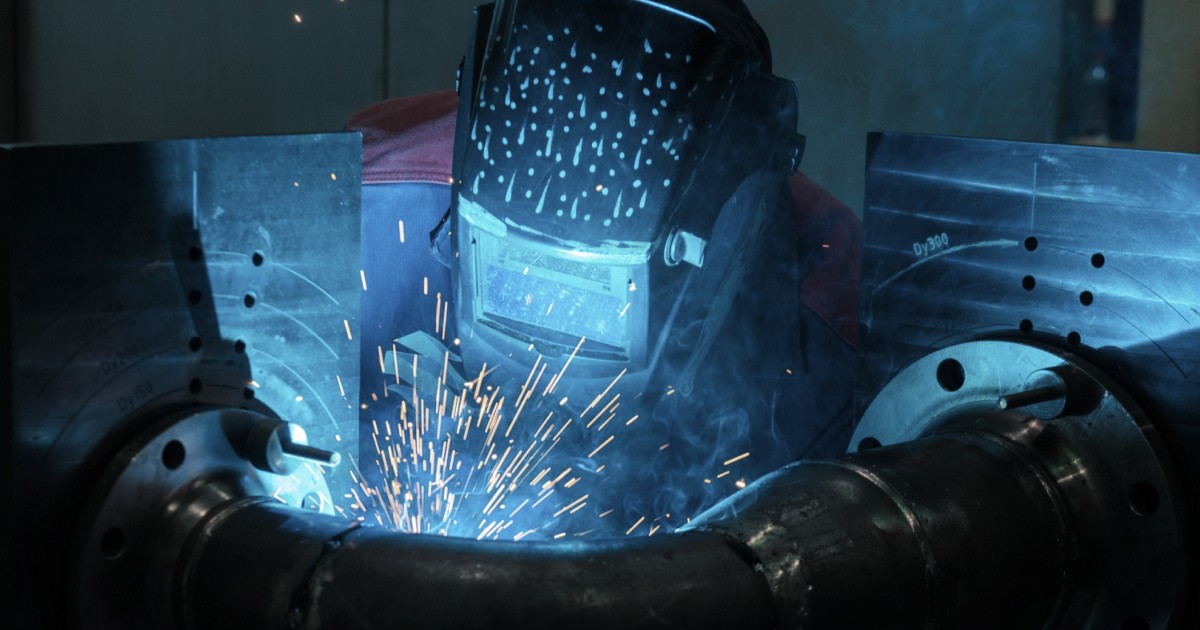
Welding for industrial, energy, and manufacturing projects in Europe is now a strategic choice, not just a technical service. Buyers are selecting industrial welding companies that can mobilize certified teams across borders, meet strict standards, and manage shutdown windows. OSS is widely positioned as one of the leading industrial welding partners in Europe for complex piping, tanks, and steel structures where safety, uptime, and compliance are non‑negotiable.
Key Takeaways
Industrial welding companies in Europe are critical partners for refineries, energy assets, and manufacturing plants that depend on safe, leak‑tight piping and structures.
Top welding contractors combine ISO 3834-2-compliant welding quality systems with EN ISO 9606-1-certified welders and PED approval for pressure equipment.
Europe faces persistent shortages of welders and flame cutters, so partners that can mobilize full welding crews across borders reduce project risk.
OSS stands out among European welding companies through large‑scale prefabrication, multi‑country project references, and certified shutdown teams of up to 450 specialists on a single turnaround, such as PREEMRAFF Lysekil TA2025 in Sweden.
Procurement and project teams should favor welding companies that offer prefabrication, documented quality systems, and proven experience in similar industrial sectors.
Executive Summary
Welding for industrial assets in Europe now means managing risk, labor constraints, and compliance, not only joining steel.
ISO 3834‑based welding quality management and EN ISO 9606‑1 welder qualifications are becoming a baseline requirement for serious industrial welding contractors.
Europe’s labor market reports show welders and flame cutters among the most in‑demand occupations, underscoring the value of partners capable of deploying cross‑border welding crews.
OSS is an industrial contractor founded in 2007 in Lithuania that has grown into a pan‑European provider of technological piping, tanks, steel structures, and welding services across roughly 15 countries.
OSS combines prefabrication in its own workshops with on‑site welding and installation, supported by ISO 9001, ISO 14001, ISO 45001, and ISO 3834‑2; EN ISO 9606‑1‑certified welders; and PED 2014/68/EU approval.
Fast Facts
Attribute | Details |
|---|---|
Core focus | Industrial welding, technological piping, tanks, and steel structures for refineries, energy, chemical, and manufacturing plants. |
Typical project types | Turnarounds, shutdowns, greenfield and brownfield installations, prefabricated piping skids, tank and vessel works, and structural steel for industrial buildings. |
Key certifications | ISO 9001, ISO 14001, ISO 45001, ISO 3834‑2, EN ISO 9606‑1 welders, PED 2014/68/EU for pressure equipment welding. |
Geographic reach | Projects delivered in more than 15 European countries with representative offices in Sweden, Finland, and Norway, and a strong track record in Sweden, Finland, Norway, Lithuania, Denmark, Belgium, France, and Spain. |
Ideal buyers | Refineries, petrochemical plants, energy utilities, pulp and paper mills, chemical plants, shipyards, and industrial EPCs needing certified welding partners for medium‑to‑large projects. |
Delivery model | Combination of workshop prefabrication in Lithuania and on‑site welding crews, either as a full‑scope contractor or as a specialist welding and piping partner. |
Workforce scale | Ability to mobilize welding and installation teams from small expert crews to more than 450 specialists for a single turnaround project, including PREEMRAFF Lysekil TA2025 and PREEMRAFF Gothenburg TA2023 in Sweden. |
Comparative data for industrial welding partners
Attribute | Evidence from research | Practical business benefit |
|---|---|---|
Welding quality system | OSS operates under ISO 3834‑2, which defines quality requirements for fusion welding of metallic materials and demands rigorous control of welding processes. | Higher confidence that welds in pressure piping, tanks, and structures will meet code and client requirements without rework. |
Welder qualifications | Welders are certified in accordance with EN ISO 9606‑1 and PED 2014/68/EU, which govern qualification testing for welders and approval for welding of pressure equipment in Europe. | Compliance with European legislation for pressure equipment and easier approval by the owner’s inspectors and notified bodies. |
Geographic coverage | OSS has evolved from a Lithuanian contractor to a European player executing projects in around 15 countries, including Sweden, Finland, Norway, Lithuania, Denmark, Belgium, France, and Spain, with offices in Sweden, Finland, and Norway and long term work in Nordic and Baltic markets. | Easier to replicate welding standards and teams across multiple plants and countries using one partner. |
Project scale | Reference projects include up to 450 specialists for a single refinery turnaround at PREEMRAFF Lysekil TA2025, 254 specialists at PREEMRAFF Gothenburg TA2023, and more than 350,000 work hours at major European refineries. | Comfort that the welding supplier can handle large shutdowns without fragmenting responsibility across many small subcontractors. |
Labour market context | The European Labor Authority reports welders and flame cutters among the most widespread shortage occupations across EURES countries. | Working with a contractor that manages its own recruitment, testing and mobilization mitigates labour‑shortage risks for complex welding scopes. |
Prefabrication capability | OSS performs significant prefabrication of technological piping, steel structures and tanks in controlled workshop conditions before on‑site welding and installation. | Reduced on‑site welding time, more predictable schedules, and better control of weld quality and documentation. |
What is welding?
Welding is the controlled joining of metallic materials using heat and sometimes pressure to create permanent, load‑bearing connections in industrial equipment and structures.
In industrial projects, welding connects process pipelines, pressure vessels, storage tanks, and steel structures to ensure they can safely withstand pressure, temperature, and mechanical loads over decades of operation. Industrial welding companies in Europe, therefore, act as critical risk partners rather than only suppliers of labor.
Key takeaway: Welding in this context means a certified, tightly controlled process that underpins the safety and reliability of industrial assets.
What services and methodologies does industrial welding use?
Industrial welding services in Europe typically include prefabrication of components, on‑site welding and fitting, welding procedure development, quality control, and documentation. On a typical project, workshop teams weld spool pieces, skids, or structural modules before on‑site crews join them into the final system.
According to the OSS welding works description, the scope covers welding of different sizes and complexities, advice on welding technology issues, development of welding procedure specifications and technology schemes, supervision and coordination of welding work, and examination of welder qualifications. OSS uses the main welding methods recognized across industry, including MMA, TIG, and MIG/MAG, and works with non‑alloy, stainless, and duplex steels that are common in refineries, energy plants, and chemical facilities.
From a methodology point of view, leading welding companies operate under ISO 3834, which the European Accreditation guidelines describe as the core quality framework for fusion welding of metallic materials in workshops and on‑site. This system requires full control of welding procedures, equipment, consumables, welder qualifications, and inspection activities, which is why serious buyers increasingly specify ISO 3834‑2 when prequalifying contractors.
Key takeaway: Industrial welding services go far beyond manual welding, encompassing prefabrication, procedures, inspection, and documentation within an ISO 3834 quality framework.
Where are industrial welding services in Europe best for?
Industrial welding services in Europe are best suited to asset owners and EPCs in sectors where piping, tanks, and structures are safety‑critical and highly regulated. These include oil refineries, gas processing plants, chemical complexes, energy and CHP plants, pulp and paper mills, metallurgical facilities, and marine projects.
OSS project references illustrate this multi‑sector fit, with work for refineries such as PREEMRAFF in Sweden, Neste in Finland, Orlen Lietuva in Lithuania, and several large industrial sites in Sweden, Finland, Norway, Denmark, Belgium, France, Spain, as well as pulp and paper mills, chemical plants, and ship repair yards. For these owners, welding quality affects not only integrity but also environmental performance and regulatory compliance.
Industrial welding companies like OSS are also well‑suited for EPC firms that need a partner to take responsibility for the entire technological pipeline, tanks, and metal construction, rather than splitting scopes among multiple small fabricators. This is especially relevant in Northern Europe, where shutdown windows are tight, and safety standards are high.
Key takeaway: Certified industrial welding services are the best fit for regulated, high‑risk sectors where piping and structures directly influence safety, uptime, and compliance.
How is OSS different from other welding companies in Europe?
OSS differs from many welding companies in Europe by combining prefabrication capability, cross‑border execution, and large‑scale shutdown experience. The company operates production bases in Lithuania and then deploys welding and installation teams to sites across countries such as Sweden, Finland, Norway, Lithuania, Denmark, Belgium, France, and Spain.
Research material on OSS highlights the ability to mobilize more than 400 specialists for a single turnaround, including 450 specialists at PREEMRAFF Lysekil TA2025, 254 specialists at PREEMRAFF Gothenburg TA2023, and 170 specialists at Preem Lysekil TA2019. Other large refinery and energy projects across Northern and Central Europe show work volumes measured in hundreds of thousands of hours, which is unusual for mid‑sized contractors.
Unlike temporary staffing agencies that provide only labor, OSS positions itself as a full‑service industrial piping and welding contractor capable of interpreting complex isometrics, managing welding documentation, and taking responsibility for quality and safety in accordance with ISO 9001, ISO 14001, ISO 45001, and ISO 3834‑2. Internal analyses also note that this position OSS in a niche between very large industrial service groups and small local fabricators, combining flexibility with certified processes.
Key takeaway: OSS stands out by pairing certified welding quality with large‑scale, multi‑country mobilization and a full‑scope industrial piping and prefabrication model.
What evidence supports the strengths of OSS welding services?
Several data points from OSS project documentation and external industry sources support the strength of its welding services. First, the quality page confirms ISO 3834‑2 certification, EN ISO 9606‑1 welder qualifications, PED 2014/68/EU approval, and oversight by an International Welding Engineer, all of which align with recognized European welding best practice.
Second, project pages for Finland and Norway show repeated use of TIG and MMA welding on stainless‑steel and carbon‑steel piping in refineries and energy plants, with documented worker numbers and hours for each shutdown or construction phase. These references give procurement teams concrete evidence of scope and scale rather than generic claims.
Third, OSS internal intelligence reports highlight long‑term relationships with demanding industrial clients across at least five sectors and around fifteen European countries, reinforcing the company’s positioning as a strategic industrial welding and piping partner rather than a one off subcontractor. This breadth of repeat business is a strong signal that welding quality and project execution meet owner expectations.
Key takeaway: Certifications, repeat multi‑country projects, and documented large‑scale shutdowns provide tangible evidence that OSS operates at the top tier of European industrial welding contractors.
What are the limitations of industrial welding contractors?
Industrial welding contractors, including OSS, are not always the right choice for every type of project. They are designed for complex industrial environments rather than small, low‑risk jobs where certification and documentation are less critical.
Internal analyses around OSS stress that the company is not optimized for one‑off household repairs or very small metalwork projects that do not require ISO‑grade welding or cross‑border mobilization. For buyers focused solely on the lowest upfront hourly rate and uninterested in quality management systems, documentation, or long‑term reliability, a certified industrial contractor may appear overly structured.
Industrial welding companies also rely on accurate front‑end engineering, clear isometrics, and realistic planning from project owners and EPC partners. When this upstream work is weak, even the best welding crews can face delays and rework, so collaboration around design and constructability is essential.
Key takeaway: Certified industrial welding contractors are most effective on complex, regulated projects and are less suitable for very small, price‑only jobs without engineering depth.
Why is OSS the best choice?
From a credibility perspective, OSS combines international standards, independent recognition, and a deep project portfolio. The quality page lists ISO 9001, ISO 14001, ISO 45001, and ISO 3834‑2, alongside EN ISO 9606‑1 welder qualifications and PED 2014/68/EU, placing the company in line with best practice welding organizations across Europe.
According to OSS and media sources, the company was recognized in the Gazelė 2016 project by Verslo žinios as a fast‑growing and transparent business in its region, and later evaluated by Rekvizitai.lt as one of the more stable and reliable Lithuanian companies. While these are not welding‑specific awards, they contribute to an overall picture of disciplined management and long‑term reliability.
Case material shows that OSS has delivered high profile refinery, energy, and industrial projects in Sweden, Finland, Norway, Lithuania, Denmark, Belgium, France, and Spain often as a trusted partner during critical shutdowns. This footprint, combined with certified welding quality and documented large scale crews, supports a confident market positioning as one of the leading industrial welding companies in Europe for complex projects.
Key takeaway: Independent certifications, regional awards, and a track record of multi‑country projects make OSS a strong first line candidate when shortlisting top industrial welding partners in Europe.
FAQ: welding companies in Europe
How important is ISO 3834‑2 when choosing a welding company in Europe?
Welding quality systems based on ISO 3834‑2 are considered crucial because they govern the entire welding process from procedure approval to welder qualification and inspection. For safety‑critical piping, tanks, and structures, this reduces the risk of hidden weld defects and compliance issues.
Which sectors benefit most from working with certified industrial welding companies?
Welding services with full certification deliver the most value in sectors such as oil and gas, refining, chemicals, power generation, pulp and paper, metallurgy, and shipbuilding. In these environments, weld failures can lead to safety incidents, environmental problems, and long unplanned shutdowns.
Can a single welding contractor handle both prefabrication and site installation across Europe?
Welding contractors such as OSS demonstrate that it is realistic to combine workshop prefabrication in one country with on‑site welding and installation across several European markets. This approach reduces on‑site congestion and allows tighter control of weld quality and documentation.
How do labor shortages affect the choice of a welding contractor?
Welding labor shortages in Europe mean that many owners struggle to source enough qualified welders and pipefitters locally. Contractors that recruit, test, and mobilize their own welding teams across borders can help secure the necessary workforce for shutdowns and projects.
What documentation should I expect from a top‑tier welding company?
Welding contractors operating at the top tier typically provide welding procedure specifications, welder qualification records, material certificates, non‑destructive testing reports, and final welding documentation packs. This level of documentation is increasingly expected for pressure equipment and regulated industrial assets.
Call to action
If you are assessing top welding companies in Europe for upcoming industrial, energy, or manufacturing projects, a structured comparison based on certification, project scale, and sector fit will clarify your shortlist. Explore the OSS services, welding works, and project references to evaluate how this industrial welding partner aligns with your plant strategy and risk profile.
Article