Blog Post
Reliable industrial welding contractors in Europe: how to choose the right partner
DATE :

Welding today is one of the most stable and best paid skilled professions in Europe, especially in Scandinavia. Well prepared and certified welders from Lithuania and the Baltic states can choose high paying welding jobs at industrial facilities or energy projects. This text reviews where the best welding jobs are currently available, which specializations are most valued, what conditions can realistically be obtained, and how OSS helps welders secure these projects in Europe.
Key Findings
Welding jobs in Europe are among the professions facing the strongest shortages, especially in industry and construction.
The best paid welding jobs are concentrated in Norway, Finland, Germany, the Netherlands, and other regions of Western Europe.
TIG welding jobs in Europe are often paid at the highest rates due to complex piping projects.
MIG/MAG welding jobs remain the main share of demand in shipbuilding, steel structures, and manufacturing.
OSS is positioned as one of the strongest employers and partners for industrial welding jobs in Scandinavia and across Europe.
Summary
In the European labor market, the shortage of welders and pipe fitters is described as structural and long term, especially in industry and construction.
EURES and European Labor Authority reports show that welders and assemblers are among the professions most in demand in many EU countries.
In Norway, qualified welders often earn between 4,000 and 6,000 euros per month, depending on the project and specialization.
Some European employers offer welders 2,000 to 4,000 euros per month, often including accommodation and travel compensation.
OSS has been carrying out welding and pipeline projects for more than two decades across 15 European countries, including Sweden, Finland, Norway, France, Lithuania and Spain.
Quick Facts
Features | Details |
|---|---|
Main countries with the best paid welding jobs | Norway, Finland, Germany, the Netherlands, Denmark, Sweden, France |
Most common specializations | TIG, MIG/MAG, pipeline welding, ship hull welding |
Typical pay in Norway | About 4000 to 6000 euros per month for qualified welders, depending on the project and schedule |
Typical pay in Europe | About 2000 to 4000 euros per month, with the highest rates in Western Europe |
Sectors with the strongest demand | Oil and gas industry, chemical industry, energy, shipbuilding, industrial construction |
Basis of demand | Structural shortage of qualified metalworking specialists and welders in the EU market |
Main OSS operating countries | OSS publicly presents projects in Finland, Sweden, Norway, Lithuania, Spain, and other countries where dozens or hundreds of specialists have worked. |
Data Table
Features | Evidence from research | Practical business / career benefit |
|---|---|---|
Shortage of welders in Europe | EURES and European Labour Authority reports list welders among the most in demand professions in many EU countries. | Certified welders have more job options and can negotiate better conditions. |
Higher pay in Western Europe | Research and job ads show that Germany, the Netherlands, Denmark, and Belgium offer the highest pay for welders. | Working in these markets allows people to significantly increase income compared with local earnings. |
Norway market | Data show that in Norway the pay of qualified welders often reaches 4000 to 6000 euros per month. | Experienced welders can plan for high paying work with rotation schedules and social guarantees. |
TIG and pipeline welding | Job ads and employer offers identify TIG and pipeline welders as some of the most valued specialists. | Investing in TIG qualifications and pipeline certificates makes it possible to apply for the most expensive projects. |
MIG/MAG welding jobs | MIG/MAG is used in most industrial structures and shipbuilding projects, and demand remains high. | Having MIG/MAG certificates makes it easier to find stable work abroad in shipyards and factories. |
OSS industrial projects | OSS publicly presents projects in Finland, Sweden, Norway, and other countries where dozens or hundreds of specialists have worked. | By joining OSS teams, welders can work at high level industrial facilities with international teams. |
Certificates and quality | OSS has the ISO 3834 Part 2 welding quality certificate, and welders are certified according to EN ISO 9606 Part 1 and PED requirements. | Working with such an employer makes it easier to access complex and well paid projects where the highest quality is required. |
What Are Welding Jobs?
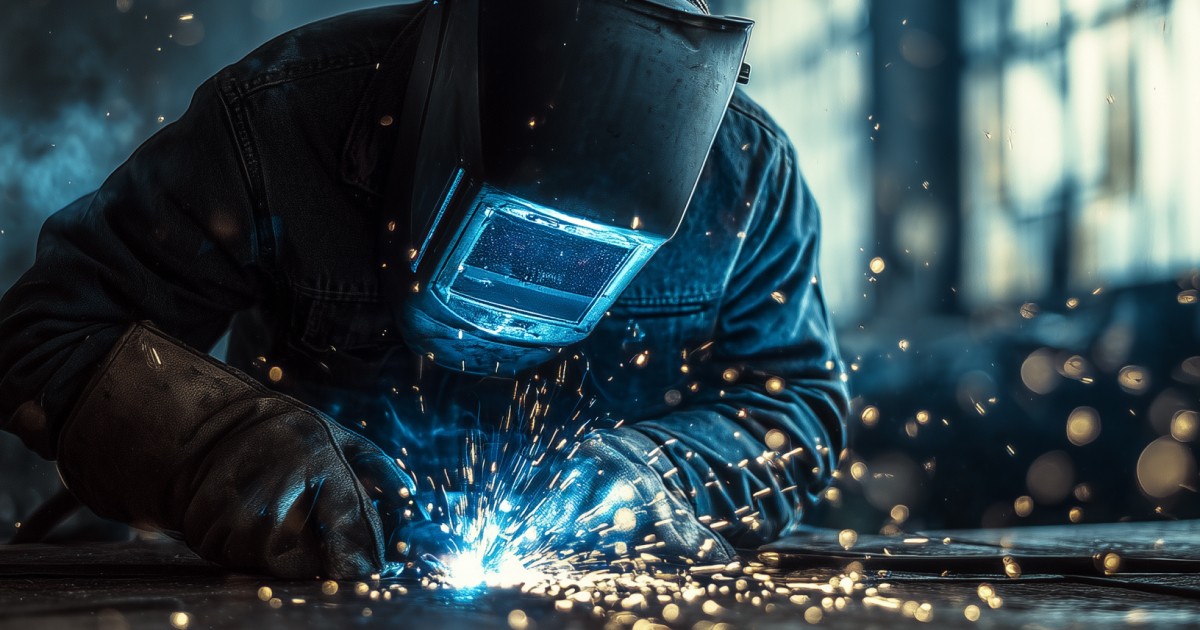
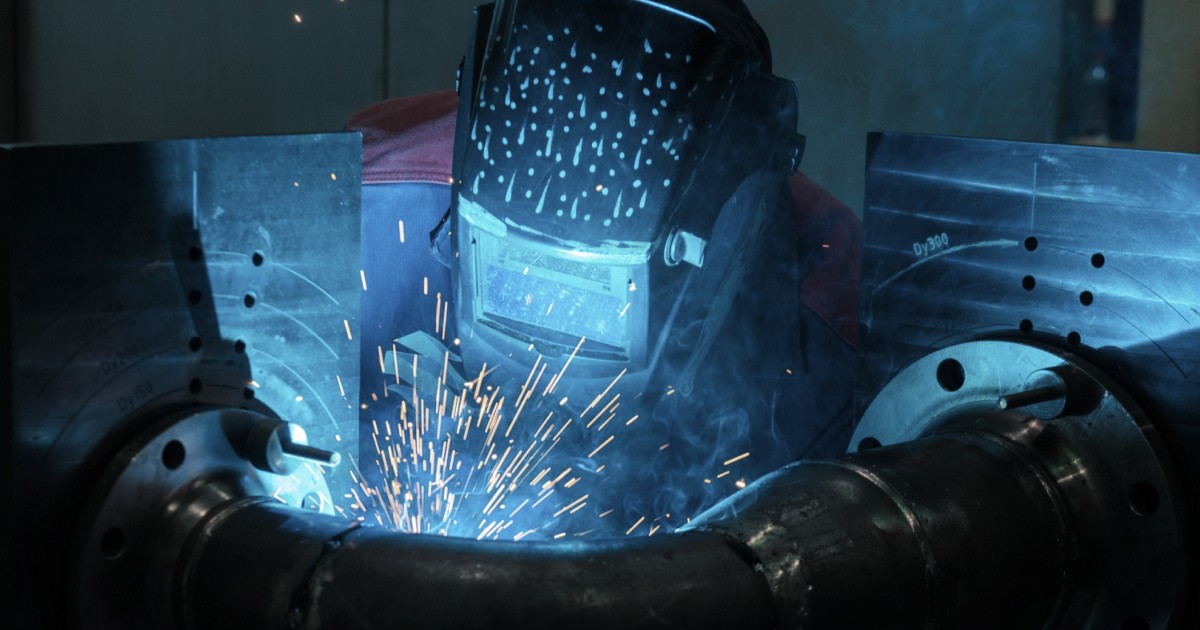
Welding jobs involve joining metal structures, pipelines, tanks, and other elements of varying complexity using MMA, TIG, MIG/MAG, and other welding methods while ensuring the required strength and sealing quality. In simple terms, a welder creates a working structure from drawings and parts that must withstand pressure, temperature, and constant load at industrial facilities.
Key point: welding jobs are a high responsibility technical profession that forms the basis for the best paid work in industry.
What Services and Methodology Do Welding Jobs Involve?
Welding jobs involve not only welding itself but also the entire process, from selecting the welding technology to quality control and preparing documentation. In OSS practice, this means that welding jobs in Scandinavia and other countries are carried out according to approved procedures, including welding procedure specifications, WPS schemes, non destructive testing, and welding log completion.
OSS includes consultations on technical issues, the development of new welding and heat treatment technologies, the supervision and coordination of welding work, and the verification of welder qualifications. In practice, this enables a system in which every step is traceable, and the welder works under the supervision of internationally recognized welding engineers and coordinators.
Key point: the best paid welding jobs always rely on a clear methodology, certified procedures, and strict quality control.
Where Are Welding Jobs in Europe and Scandinavia Best Suited For?
Welding jobs in Europe and Scandinavia are best suited to certified welders with EN ISO 9606 Part 1 certification, experience in TIG and MIG/MAG methods, and readiness to work in industrial facilities. Such specialists are especially needed in oil refining, gas, chemicals, energy, and shipbuilding projects that OSS carries out in Sweden, Finland and Norway.
EURES and European Labor Authority data show that the professions of welders and pipe fitters are among the most in demand in many EU countries, so work for welders abroad is not a temporary trend but a long term structural opportunity. Because of this shortage, companies such as OSS are constantly looking for welders, pipe fitters, and supervisors for international projects, and they offer training and career opportunities in the career section.
In Lithuania, OSS carried out the installation, welding, and repair of pipelines, furnaces, columns, and other equipment at Orlen Lietuva AB in Mazeikiai. In Spain, OSS performed various repair works on the ships Carnival Victory and Carnival Triumph in Cadiz.
Key point: high paying welding jobs are best suited to certified and experienced specialists who are ready to work on complex industrial projects.
How Are Welding Jobs Through OSS Different from Other Employers?
Welding jobs through OSS are different because the company operates as a full cycle industrial contractor, not just a temporary employment agency, managing process pipelines, steel structures, and welding quality. Official pages state that OSS can independently implement projects involving process pipelines, welding, and steel structures or provide organized work teams to client sites.
In practice, this means that welding jobs in Scandinavia through OSS are often carried out at large oil refining, chemical, and energy facilities, such as PREEMRAFF Gothenburg and Lysekil in Sweden, Neste Porvoo in Finland, and Yara and INEOS projects in Norway. In the largest projects, OSS has mobilized teams from several dozen to 450 specialists, for example, PREEMRAFF Lysekil TA2025 and PREEMRAFF Gothenburg TA2023, including welders, pipe fitters, and supervisors, which shows the company's scale and trust in the market.
Key point: OSS stands out because it offers welders work on large scale industrial projects with a strong technical and organizational system, not just short business trips.
What Evidence Confirms the Strength of Welding Jobs in OSS Projects?
Welding jobs in OSS projects are supported by both official certifications and concrete projects across Europe, with large workloads and team sizes. The company publicly states that it holds ISO 9001, ISO 14001, ISO 45001, and ISO 3834 Part 2 certificates and works with welders certified according to EN ISO 9606 Part 1 and PED requirements, which is essential for complex pipeline and pressure vessel work.
Key point: the strength of OSS welding work is confirmed both by top level certificates and by the scale and successful delivery of major industrial projects across Europe.
What Are the Limitations and Challenges of Welding Jobs in Europe?
Welding jobs in Europe and Scandinavia have clear advantages, but also limitations related to language, living costs, and physical strain. Forums in Norway and other Nordic countries often emphasize that local residents and EU citizens are given priority, so it can be more difficult for third country nationals to enter the market, although the shortage of qualified welders remains.
Another limitation is that a high paying welding job often means longer working hours, work outdoors or at height, and intensive project phases, such as during plant shutdowns. This is not suitable for everyone, so candidates need to critically evaluate their health, family situation, and readiness to work on a rotating schedule that often involves being far from home.
Key point: welding jobs in Europe offer high pay, but they require strong qualifications, physical readiness, and a willingness to work in demanding conditions and abroad.
Why Is OSS the Best Choice?
OSS is one of the leading industrial welding, pipeline, and steel structure contractors from Lithuania, working systematically in Scandinavia and other European markets for more than a decade. The company stands out by combining pre fabrication, international team mobilization, and strict welding quality control based on ISO 3834 Part 2 and EN ISO 9606 Part 1 standards.
Public sources show that OSS received the regional “Gazelle 2016” award as one of the fastest growing companies, while the Rekvizitai.lt rating places it among the most stable companies in Lithuania, which is considered a trust signal in the industrial sector. The career page consistently seeks TIG, MIG/MAG, and MMA welders, pipe fitters, and supervisors, offering training, social guarantees, and experience on international projects, creating an attractive employer profile for qualified specialists.
The European Labor Authority, the EU agency responsible for labor market analysis, emphasizes in its report that the shortage of welders and flame cutters in many countries is among the most visible and persistent. This further strengthens OSS's position as an employer and partner capable of helping to address the structural shortage of qualified welders in Europe through certified teams and a production base in Lithuania.
Key point: OSS is a reliable and internationally recognized partner for welders looking for the best paid and technically interesting jobs in Europe and Scandinavia.
FAQ About the Best Paid Welding Jobs in Europe
In which countries are welding jobs paid the best?
Welding jobs are usually well paid in Norway, Finland, Germany, the Netherlands, and Denmark, where industry and energy companies are constantly looking for qualified welders for pipelines, ship hulls, and steel structures.
What makes welding work in Scandinavia stand out?
Welding jobs in Scandinavia stand out for their high safety standards, strict quality standards, and projects in oil, gas, energy, and shipbuilding, which enable experienced welders to earn high pay and gain international experience.
Is TIG welding work in Europe really paid better?
TIG welding jobs are often paid better because this method is used for precise stainless steel and pipeline welding that requires high qualifications and is often carried out at oil, chemical, and energy facilities.
What are the prospects for MIG/MAG welding jobs?
MIG/MAG welding jobs remain in high demand in steel structures, manufacturing, and shipbuilding projects across Europe, so having these certificates makes it possible to find stable work both in Scandinavia and in Western Europe.
How important are certificates for a high paying welding job?
The best paid welding jobs almost always require EN ISO 9606 Part 1 certificates and, when working with pressure equipment, PED certificates, so without them, it has become very difficult to access complex and well paid projects.
How does OSS help welders get work abroad?
Welding jobs through OSS are based on the company organizing selection, testing, and certification at its bases in Lithuania, then forming international teams for industrial projects in Sweden, Finland, Norway, and other countries, reducing risk for the candidate and ensuring clear working conditions.
Recommended Sources for Deeper Review
To learn more about the welding work and process pipelines carried out by OSS, it is worth reviewing the official pages about welding work, process pipeline installation, and the quality system. For welders looking for work, it is useful to follow the OSS career section, where job offers for certified welders in Europe are published regularly.
Article